
Total Hip Replacement Surgery in Hyderabad
Total Hip Replacement Surgery in Hyderabad is a surgical treatment for patients whose hip joint has been severely damaged by arthritis, avascular necrosis, fractures, inflammatory conditions or other diseases that cause persistent pain and loss of mobility.
During total hip replacement, the damaged portions of the hip joint are replaced with artificial components designed to restore joint movement and reduce pain. At Udai Omni Hospital, Hyderabad, treatment is planned according to the patient's diagnosis, age, activity level, bone condition, general health and individual functional requirements.
Udai Omni has a long-standing focus on orthopaedics and joint replacement. Its published hip-replacement information includes primary and revision hip replacement, hip resurfacing, and treatment of complex hip conditions.
When Is Total Hip Replacement Needed?
Hip replacement is generally considered when damage to the joint causes significant pain or functional limitation and appropriate non-surgical treatments are no longer providing sufficient relief.
Common Symptoms
- Persistent hip or groin pain
- Pain while walking or standing
- Difficulty climbing stairs
- Difficulty getting up from a chair
- Stiffness and reduced hip movement
- Difficulty putting on shoes or socks
- Pain that interferes with sleep
- Limping or reduced walking ability
- Difficulty performing everyday activities
Can Hip Pain Be Treated Without Surgery?
Not every patient with hip pain requires a hip replacement. Depending on the cause and severity, treatment may include:
- Activity modification
- Physiotherapy
- Strengthening exercises
- Weight management where appropriate
- Medicines prescribed by a doctor
- Walking aids
- Treatment of the underlying condition
Conditions That May Require Hip Replacement
Total hip replacement may be considered for several conditions affecting the hip joint.
Osteoarthritis
Osteoarthritis can progressively damage the cartilage covering the hip joint, resulting in pain, stiffness and reduced mobility.
Avascular Necrosis
Avascular necrosis (AVN) occurs when the blood supply to the femoral head is disrupted, potentially causing collapse and damage to the hip joint. Advanced AVN can require hip replacement.
Rheumatoid & Other Inflammatory Arthritis
Inflammatory conditions can damage the cartilage and bone of the hip, sometimes resulting in severe pain and loss of function.
Hip Fractures
Certain fractures around the hip, particularly in older adults or patients with significant joint damage, may require joint replacement depending on the fracture pattern and patient's condition.
Secondary Arthritis
Previous trauma, childhood hip conditions, infection, developmental abnormalities and other disorders can damage the hip and lead to arthritis requiring replacement.
Udai Omni's published hip-treatment information specifically lists AVN, fractures, rheumatoid and osteoarthritis, ankylosing spondylitis, developmental dysplasia, previous infection, trauma and other secondary causes among conditions treated with hip replacement.
What Happens During Total Hip Replacement?
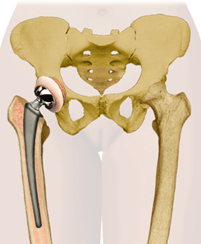
The hip is a ball-and-socket joint. During total hip replacement, the damaged femoral head is replaced with an artificial ball and the damaged socket is replaced with an artificial cup.
Administering appropriate anaesthesia
Accessing the hip joint through the selected surgical approach
Removing the damaged femoral head
Preparing the pelvic socket
Positioning the artificial acetabular component
Preparing the femur and inserting the femoral component
Selecting an appropriate bearing surface
Checking hip stability, movement and alignment
Closing the surgical wound
Hip Implant and Bearing Options
Implant selection is an important part of total hip replacement. The appropriate implant and bearing combination depends on factors such as age, activity level, bone quality, anatomy and clinical requirements.
Rather than choosing an implant solely because of its brand name, patients should discuss the implant design, bearing surface, fixation method, expected function and suitability for their individual condition with their surgeon. Udai Omni's content emphasises the importance of implant and bearing selection alongside surgical quality for long-term hip replacement function.
Bearing Materials
- Metal
- Ceramic
- Highly cross-linked polyethylene
- Other specialised bearing materials
Total Hip Replacement at Udai Omni Hospital
Udai Omni has been performing hip replacements since the 1990s, according to its published hip-treatment information. The hospital's material also describes experience with primary and revision total hip replacement and complex hip procedures.

Dr. Udai Prakash
His published profile describes specialist orthopaedic training in Scotland, consultant experience in the UK and fellowship training in Australia focused on lower-limb joint replacement and arthroscopy.
Clinical Expertise
His academic work also includes published research relating to total hip arthroplasty and hip resurfacing, including a randomised controlled trial comparing total hip arthroplasty with resurfacing arthroplasty.
Hip Resurfacing vs Total Hip Replacement
Hip resurfacing is a different procedure that preserves more of the femoral head than conventional total hip replacement. It may be considered for carefully selected younger, active patients. It is not appropriate for everyone, and patient selection and surgeon experience are particularly important.
| Procedure | What It Involves | Generally Considered For |
|---|---|---|
| Total Hip Replacement | The femoral head and socket are replaced with artificial components | Patients with significant hip joint damage causing persistent pain and functional limitation |
| Hip Resurfacing | Preserves more of the femoral head than conventional total hip replacement | Carefully selected younger, active patients, based on bone quality, diagnosis and anatomy |
Recovery After Total Hip Replacement
Recovery varies between patients and depends on the surgical approach, overall health, pre-operative mobility, age, rehabilitation and other individual factors. Early recovery generally focuses on:
- Pain management
- Wound care
- Safe movement
- Early mobilisation when medically appropriate
- Physiotherapy
- Walking with appropriate support
- Gradual improvement in strength and mobility
Risks and Possible Complications
Like any major operation, total hip replacement has potential risks. These may include:
- Infection
- Blood clots
- Dislocation
- Fracture
- Nerve or blood-vessel injury
- Implant loosening or wear
- Leg-length difference
- Persistent pain
- Need for further surgery
Revision Hip Replacement
Most hip replacements are intended for long-term use, but problems can occasionally develop. Revision hip replacement may be required if a previous hip replacement develops problems such as implant loosening, wear, dislocation or instability, infection, fracture around the implant, or other implant-related complications.
Udai Omni provides revision hip replacement for previously failed hip surgery. Its published information notes that revision procedures may require specialised implants, bone grafting or custom-made components depending on bone loss and the patient's condition.
Total Hip Replacement for AVN
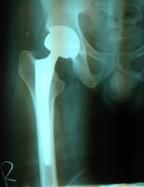
Udai Omni publishes a patient story involving a person diagnosed with avascular necrosis who underwent ceramic-bearing hip replacement in 2009. The patient describes returning to normal activities following surgery and rehabilitation.
Patient's Testimony: Total Hip Replacement
Patient stories can help explain the treatment journey, but individual experiences should not be interpreted as a guarantee of the same outcome for every patient.

I was approaching 40. I had a good career, a happy family and everything looked bright for the future. Then one day, I felt a pain in my left hip. I thought it would pass, but it gradually became unbearable. I was diagnosed with avascular necrosis or hip AVN.
I couldn't believe it. Doctors gave me medicines but only the painkillers worked as long as I took them regularly. I went through 14 months of frustration and despair. For my condition, hip replacement was a suitable option, but I was anxious whether I could get back to life 100%. I was worried that I wouldn't be able to play with my son.
As the pain worsened, my wife kept telling me surgery was perhaps the only way. A friend of mine said that I should go to Udai Clinic as it is one of the most reputed orthopaedic centres in Hyderabad. I met Dr. Udai Prakash who was visiting as a specialist from the UK at that time. He said there was not much point in delaying surgery, as it was the only option.
I did some research and found that all over India and globally, people were living active lives after hip replacement surgery. Moreover, I learnt that advances in implant options now allow greater stability and range of motion and may even enable running.
In June 2009, I underwent a ceramic bearing hip replacement. Recovery from surgery was surprisingly smooth. I had very little discomfort. I went through a rigorous rehab program under my surgeon's supervision. His encouragement and my wife's support helped me recover quickly. Looking back, I wonder why I delayed the surgery for so long.
Within three months, I was back on track. Life felt more precious than ever before. As a result, I became a better husband, a better father, a better professional, and a better member of society.
Frequently Asked Questions
01Who needs total hip replacement surgery?
02Is hip replacement necessary for every person with arthritis?
03Is total hip replacement safe?
04How long does recovery take after hip replacement?
05How long does a hip replacement last?
06Can I return to normal activities after hip replacement?
07What is the difference between total hip replacement and hip resurfacing?
Consult a Total Hip Replacement Specialist in Hyderabad
If persistent hip pain is affecting your walking, sleep, work, exercise or everyday activities, an orthopaedic assessment can help identify the cause and available treatment options. At Udai Omni Hospital, Hyderabad, the joint replacement team provides evaluation and treatment for arthritis, avascular necrosis, fractures, inflammatory conditions and other causes of severe hip joint damage.