
Partial Knee Replacement Surgery in HyderabadUnicompartmental Knee Replacement at Udai Omni Hospital
Partial Knee Replacement Surgery, also called Unicompartmental Knee Replacement (UKR), is a treatment option for selected patients whose arthritis or joint damage is limited to one part of the knee. Unlike total knee replacement, partial knee replacement preserves suitable healthy parts of the joint.
At Udai Omni Hospital, Hyderabad, partial knee replacement is considered after a detailed assessment of symptoms, examination, imaging, knee alignment, ligament condition and the extent of arthritis. Treatment is selected for the individual rather than assuming every patient requires a total knee replacement.
Partial Knee Replacement at Udai Omni Hospital
Udai Omni has a long-standing focus on orthopaedic and joint replacement care, including partial or unicondylar knee replacement, total knee replacement, revision procedures and minimally invasive surgery.

Dr. Udai Prakash
Joint Replacement Services
Dr. Udai Prakash, Director and Chief of Joint Replacement Surgery & Sports Injuries, holds MBBS, FRCS (England), FRCS (Edinburgh), FRCS (Trauma & Orthopaedics), UK and CCST UK qualifications. Udai Omni’s published information describes more than 25 years of professional experience and specialist training in joint replacement and arthroscopy.
What Is Partial Knee Replacement?
The knee has three main compartments. Some patients have arthritis confined mainly to one compartment while the remaining parts are well preserved.
The Three Knee Compartments
- Medial compartment
- Lateral compartment
- Patellofemoral compartment
In partial knee replacement, the damaged compartment is replaced with an artificial component while suitable healthy bone, cartilage and ligaments are preserved. This targeted approach may retain more natural knee structures and movement.
Who May Be a Candidate?
- Location and severity of cartilage damage
- Knee alignment and ligament stability
- Range of motion and remaining compartments
- Previous injuries or operations
- Activity level, overall health and symptoms
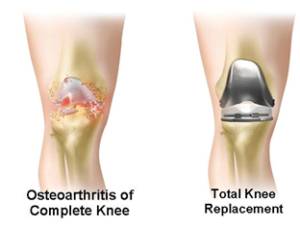
Partial vs Total Knee Replacement
Neither procedure is universally better. The choice depends on the distribution of arthritis and the condition of the knee.
Preserving Healthy Structures
Replaces the affected compartment while preserving suitable healthy structures. It can provide a more natural-feeling knee in appropriately selected patients and requires careful patient selection.
When Damage Is More Extensive
Replaces damaged surfaces more extensively and is considered when multiple areas of the knee are affected. The treatment should match the individual patient’s condition.
Benefits of Partial Knee Replacement
- Preservation of healthy bone and ligaments
- Smaller surgical approach in appropriate cases
- Less disruption to normal knee structures
- Potentially faster early rehabilitation
- Reduced post-operative discomfort in some patients
- More natural movement or function for some patients
- Earlier return to selected daily activities
When Partial Replacement May Not Be Suitable
- Significant ligament instability
- Advanced arthritis in other knee compartments
- Certain deformities
- Severe stiffness
- Previous surgeries affecting the knee
- Specific inflammatory or joint conditions
The final decision depends on a detailed orthopaedic assessment, not age or symptoms alone.
Careful Patient Selection and Surgical Planning
Partial knee replacement is considered when the disease primarily affects one knee compartment and the remaining structures are suitable. Examination, imaging, alignment, range of motion and ligament stability all influence planning.
The goal is not to choose an operation because it is newer or more advanced, but to determine the appropriate treatment for that individual knee.
Robotic-assisted techniques may be discussed where clinically appropriate; the surgeon’s experience and selection of the right procedure remain central.
Key Planning Considerations
- Extent and location of arthritis
- Remaining healthy joint structures
- Alignment and ligament stability
- Patient needs and surgical suitability
How Is Partial Knee Replacement Performed?
The damaged portion of the knee is removed and replaced with suitable prosthetic components while preserving healthy structures where appropriate.
How the Surgery Is Performed
- Anaesthesia and surgical preparation
- Accessing the affected part of the knee
- Removing damaged cartilage and a limited amount of bone
- Preparing the affected compartment
- Positioning implant components
- Checking alignment, stability and movement
- Closing the surgical wound
The exact technique depends on anatomy, the affected compartment, implant system and the surgeon’s assessment.
Recovery After Partial Knee Replacement
Recovery varies with health, pre-operative mobility, surgical technique and rehabilitation. Some patients may experience faster early recovery than with total knee replacement.
- Safe movement
- Pain and swelling management
- Knee mobility
- Muscle strengthening
- Walking
- Gradual return to everyday activities
Partial Knee Replacement Cost in Hyderabad
Costs vary according to each patient’s treatment plan and clinical requirements.
- Surgical technique and implant selection
- Pre-operative investigations
- Anaesthesia and operating-room requirements
- Hospital stay
- Physiotherapy and rehabilitation
- Additional medical care, when required
An accurate estimate should be discussed after consultation.
Choosing the Right Treatment
An orthopaedic assessment helps determine whether partial replacement, total replacement, continued non-surgical treatment or another procedure is appropriate. A single X-ray or symptom alone cannot establish suitability.
Partial Knee Replacement: Patient Experience
Udai Omni has published patient experiences involving partial knee replacement. The following patient described undergoing simultaneous partial knee replacements of both knees.
Patient Story — Bilateral Partial Knee Replacement
This is an individual patient account, not a guarantee of another patient’s outcome.
I was turning 55 but instead of celebrating, I was in mourning! My knees had finally packed in. I was not able to enjoy even a gentle walk. I was struggling.
I was told repeatedly that total knee replacement was the only answer for me. However, Dr. Udai Prakash convinced me to go for partial knee replacement, which is a unique and rare procedure in our city. I learnt that he has over 12 years experience with this procedure with excellent results. I underwent surgery of both knees simultaneously. My recovery was surprisingly smooth and I was walking with a walker from day one. I went home on day five and started walking outside without a stick within two weeks. By four weeks, I could sit on the floor and climb steps normally. My knee now feels natural and I have no pain.
I have been told horror stories of pain after knee replacement but I can honestly say that pain was not an issue at all. I highly recommend this procedure for those who are suitable for it.
A Patient-Centred Decision
Age or knee pain alone does not determine suitability. The team reviews symptoms, examination findings, imaging and the patient’s individual functional needs.
What Your Surgeon Evaluates
- Location and severity of arthritis
- Imaging and cartilage condition
- Knee alignment and ligament stability
- Range of motion and other compartments
- Previous injuries or surgeries
- Symptoms, function and general health
Choosing a Treatment Plan
Depending on the findings, treatment may involve continued non-surgical management, partial knee replacement, total replacement or another suitable intervention.
The available options, potential benefits, limitations and individual recovery expectations should be discussed with the treating orthopaedic team.
Frequently Asked Questions
01Is partial knee replacement better than total knee replacement?
02Who is suitable for partial knee replacement?
03Is partial knee replacement less painful?
04How quickly can I walk after partial knee replacement?
05Can partial knee replacement be converted to total knee replacement?
06Does partial knee replacement last as long as total knee replacement?
Consult a Partial Knee Replacement Specialist in Hyderabad
If knee pain is affecting walking, climbing stairs, exercise or everyday activities, an orthopaedic evaluation can help determine whether arthritis is responsible and which options are appropriate.
At Udai Omni Hospital, Hyderabad, the joint replacement team evaluates the extent and location of knee damage before recommending partial replacement, total replacement, non-surgical care or another suitable option.
Book a consultation to find out whether partial knee replacement is suitable for your knee condition.
Udai Omni Hospital, Hyderabad